Love the idea of a mountain cabin under tall pines but not sure which part of Pinedale fits your plans and budget? You are not alone. With its mix of historic pockets, rural subdivisions, and forest-edge retreats, Pinedale can feel like several markets in one. In this guide, you’ll learn how the main neighborhoods differ, where common home styles cluster, and what to know about utilities, permits, and seasonal living. Let’s dive in.
Pinedale at a glance
Set on the Mogollon Rim at roughly 6,400 to 6,500 feet, Pinedale is a small, unincorporated community of about 480 people surrounded by ponderosa pine forest and four distinct seasons. The area’s setting near Apache–Sitgreaves National Forest shapes lot sizes, recreation access, and the popularity of cabin-style homes. You will find a slow pace, dark skies, and plenty of trailheads nearby. Learn more about Pinedale’s setting and history.
Daily services such as large groceries, hospital care, and broader retail generally come from the Show Low and Pinetop-Lakeside area. From many Pinedale parcels, you should plan on roughly a 30 to 40 minute drive depending on the exact location and road conditions. That broader market connection influences how buyers think about commute times and shopping. A local water report notes typical drive times to regional services.
Where neighborhoods cluster
Historic Pinedale core
The small town core sits near AZ 260 with community landmarks like the Marreta B. Thomas covered bridge and the old elementary building. Housing is a mix of older site-built homes, rustic cabins, and some manufactured homes on scattered lots. Inventory in this pocket is limited, so listings can be sporadic. Background on the community’s history and layout is here.
Pinedale Estates (DWID area)
This recorded subdivision, often known by the Rim Drive area, is served by the Pinedale Estates Domestic Water Improvement District (DWID). The district historically serves about 208 customers and maintains local water infrastructure. Lots range from smaller residential parcels to about an acre or more, and elevations are in the mid-6,500-foot range. You will see a mix of site-built homes, older cabins, and some manufactured homes.
Buyers often choose Pinedale Estates for its organized water system and neighborhood feel. Be aware that the DWID’s technical report documents historical water-quality findings, including elevated selenium concentrations above the EPA maximum contaminant level in some samples. Always review the latest DWID reports and water-testing data for any given property. See the Pinedale Estates DWID well and system report.
Porter Mountain and Lakeside edges
Toward Lakeside and the Porter Mountain area, you will find multiple recorded subdivisions and rural estates with larger lots, commonly around 0.5 to 2 or more acres. Homes here skew toward larger site-built properties, with an ongoing presence of manufactured homes on rural parcels. Roads can be more rural in feel. Many buyers choose this direction for added privacy and room to spread out while staying functionally tied to Pinetop-Lakeside services.
Forest-edge cabin clusters
Parcels that touch or sit near the Apache–Sitgreaves National Forest often host rustic log cabins, A-frames, and smaller vacation properties. Many of these homes are marketed as weekend retreats or short-term rentals, thanks to easy access to trails and forest roads. To get a sense of how these cabins are presented, browse a representative seasonal rental example near Pinedale.
What home styles you’ll see
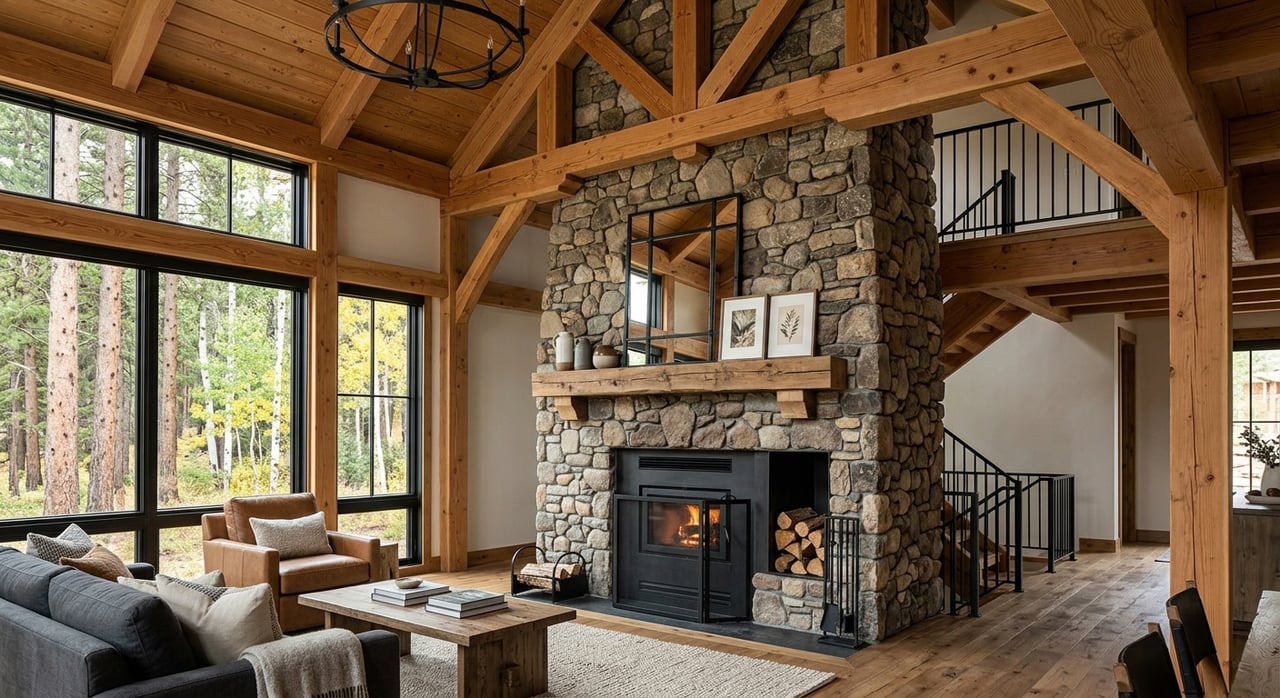
- Rustic cabins and A-frames. Expect log or log-style exteriors, stone fireplaces, and large decks. These are most common near forest edges and recreational access points. Local listing language and proximity to the national forest support this pattern.
- Manufactured and mobile homes. A significant share of rural parcels and recorded subdivisions feature manufactured homes. Navajo County allows manufactured housing with permits and applies specific standards to older units. See the rules in the section below for what to expect.
- Site-built single-family homes. In subdivisions like Pinedale Estates or toward Porter Mountain, you will see ranch, craftsman, and mountain-modern homes with larger footprints and garage space, often chosen by year-round residents.
- New construction, modular, and prefab. New builds exist but are less numerous. They tend to appear where utilities and permitting are straightforward, such as recorded subdivisions or improved parcels.
- Lot sizes and rural character. Many parcels run 0.5 to 2 or more acres. Lot size influences home type and utilities. Raw land buyers commonly plan for well drilling and septic, or tie into a local water system where available. Local documents and listings show these lot patterns.
Utilities and permitting basics
The practical details below will shape your budget, timeline, and daily experience.
Water: wells vs DWID
Water sources vary by parcel. Pinedale Estates is served by a DWID that supplies potable water to roughly two hundred customers. Other parcels rely on private wells or shared systems. The Pinedale Estates well report documents system history and notes elevated selenium concentrations above the EPA limit in some historical samples. Confirm current water source, test results, and any connection fees for the exact lot you are considering. Review the DWID technical report.
Septic and building permits
Navajo County generally requires an approved sanitary system before issuing building permits and allowing occupancy. Soil testing, system design, installation, and inspection are part of the process. This applies to site-built homes and manufactured homes placed on land. See the county building addenda and permit guidance. You can also confirm basics like road maintenance and permitting steps through the Navajo County FAQ.
Manufactured home rules
Manufactured homes are allowed with permits. As of March 1, 2024, the county prohibits placement of mobile homes 20 years or older unless they are rehabilitated to meet HUD and state standards. Older units relocated into unincorporated areas must be inspected and brought to code before occupancy. Always confirm permit and rehab history with the county for any manufactured home. Review the Navajo County Zoning Ordinance.
Snow, wind, and road access
At Pinedale’s elevation, winter weather is part of life. The county lists a 30 pounds per square foot snow load and an 80 mph basic wind speed for design purposes. Many roads are county maintained, but some private or forest roads are not and may have lower snow-removal priority. Confirm year-round access, maintenance responsibilities, and any HOA or private road agreements. Check county building loads and access FAQs and Navajo County FAQs.
Power and internet
Electricity is provided by local cooperatives and providers in the Show Low and Pinetop-Lakeside region, with ongoing infrastructure activity. Remote parcels may need service extensions, and many owners use propane and backup generation. Cell coverage can vary in forested terrain. Verify utility availability and internet options for any specific parcel. See regional infrastructure references from the Forest Service.
Wildfire and insurance
Pinedale sits within a Wildland–Urban Interface area where wildfire risk is a planning focus. That can affect insurance costs, the need for defensible space, and material choices. Ask about local mitigation practices and budget for ongoing vegetation management. Review the regional hazard mitigation plan.
Which area fits your goals
- You want a classic cabin retreat. Focus on forest-edge clusters with direct access to Apache–Sitgreaves trailheads. Log cabins and A-frames are common, and many are set up as vacation homes.
- You want neighborhood feel with defined water service. Pinedale Estates offers a DWID-managed system, mixed home types, and a community layout. Review the DWID report and water quality notes for due diligence.
- You want acreage and privacy. Look toward recorded subdivisions and rural parcels between Pinedale and the Porter Mountain area, where 0.5 to 2-plus acre lots are common and both site-built and manufactured homes appear.
- You plan to live year round. Consider subdivisions with clear year-round access, established utilities, and site-built homes sized for daily living and storage.
- You want a manufactured home option. Many parcels accommodate HUD-code manufactured homes. Factor in county permitting, age/rehab rules, and septic requirements.
Budget and timing notes
- Inventory is limited in the Pinedale core, so pricing can be volatile from one listing to the next. Nearby markets like Show Low and Pinetop-Lakeside often provide additional context on value.
- The broader area shows a wide spread: raw land can be comparatively affordable, while larger site-built and newer cabin builds reach the upper midmarket. Because market pages change daily, verify current pricing trends before you write an offer.
- If you are building or placing a home, budget time for septic approvals, utility connections, potential well drilling and water treatment, and seasonal access planning.
Quick parcel due-diligence checklist
- Confirm water source. DWID connection, private well, or shared well. Review water quality and any hookup or impact fees. Start with the DWID report if looking in Pinedale Estates.
- Verify septic. Get soils testing done and understand permit timelines. See county guidance on permits and sanitary systems.
- Check manufactured home rules. If applicable, confirm age, HUD tags, rehab status, and county permits. Reference the zoning ordinance for details.
- Confirm access and maintenance. Ask who maintains the road, snow-removal priorities, and any HOA or private road agreements. Use the county FAQ for baseline info.
- Review hazards and insurance. Understand wildfire risk, defensible space needs, and potential insurance impacts. Regional hazard planning documents provide context.
- Plan for power and internet. Confirm electric service availability and bandwidth options. Regional infrastructure information is available via the Forest Service.
Ready to tour Pinedale?
Whether you want a tucked-away A-frame, a site-built home in a recorded subdivision, or a buildable parcel, having a local guide makes all the difference. From mapping out drive times to verifying DWID and septic details, we’ll help you compare options and plan your next steps with confidence. Reach out to Paulina Schubel to start your search or request an instant home valuation.
FAQs
Where are cabins concentrated in Pinedale?
- Cabin-style homes tend to cluster near Apache–Sitgreaves National Forest edges and recreation access points, and many are marketed as seasonal or vacation properties. See a representative vacation rental example.
Are manufactured homes allowed in Pinedale and Navajo County?
- Yes, with permits; units 20 years or older face added rehab requirements before placement or occupancy per county rules. Review the county zoning ordinance.
Will my Pinedale home have town water and sewer?
- Some subdivisions, like Pinedale Estates, have DWID water, while many parcels rely on private wells and septic; the county generally requires an approved sanitary system before building and occupancy. See DWID details and county guidance.
What seasonal costs should I plan for in Pinedale?
- Plan for septic installation or maintenance, well or DWID fees, potential private road upkeep, defensible-space work for wildfire, winter heating, and snow-readiness. County FAQs outline access and maintenance basics.
How far is Pinedale from Show Low services?
- Many parcels are roughly a 30 to 40 minute drive to Show Low and Pinetop-Lakeside services depending on location and road conditions. A local infrastructure report notes typical drive times.